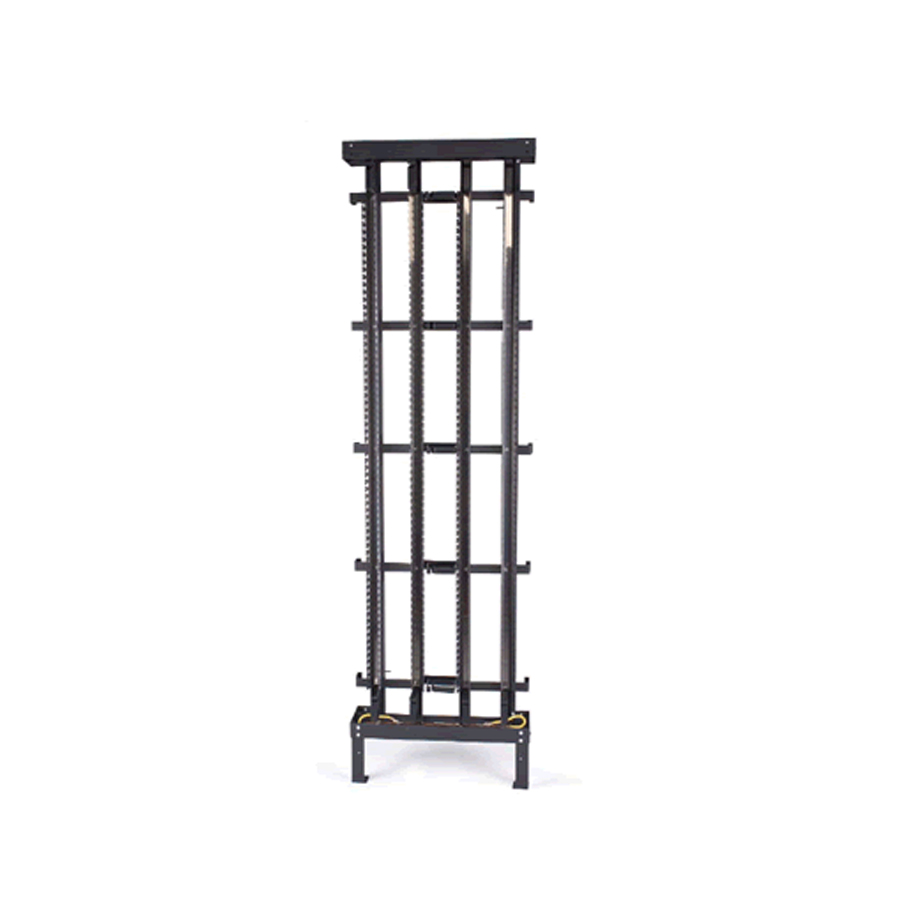
Frames & Subracks
FAQs
Frames and subracks are mounting and termination systems used to organise, protect, and interconnect large numbers of copper voice cables. They provide a centralised point for managing connections between telephone lines, patch panels, or external network links. Commonly used in telecom exchanges, data centers, and building distribution rooms, they ensure structured, scalable, and serviceable cabling layouts.
Backmount frames hold IDC (Insulation Displacement Connection) or Highband modules, allowing easy termination and cross connection of copper pairs. Ideal for wall or rack mounting.
Distribution frames are larger assemblies designed for main distribution points, managing high volumes of incoming and outgoing voice or data lines.
Subracks are modular units used within racks or cabinets to mount connection modules or patching hardware, providing a compact and flexible cabling management option.
Each type serves a different scale of voice cabling infrastructure, from small office setups to full telecom networks.
Benefits include:
- Organisation, the keep terminations neat, labelled, and easy to maintain.
- Scalability, they support modular expansion as network capacity grows.
- Efficiency, they simplify fault finding and reconfiguration of lines.
- Protection, they prevent cable strain, bending, and accidental disconnection.
- Compatibility, they work with industry standard connection modules and patch leads.
Consider the following factors:
- Application size, small setups may use backmount frames, while large telecom rooms require full distribution frames.
- Mounting style, choose wall mounted or rack mounted depending on available space.
- Connection type, ensure compatibility with your IDC, LSA-PLUS, or Highband termination modules.
- Capacity and expansion, select a system that supports current requirements with room for future growth.
- Environment, for external or industrial sites, ensure enclosures and frames are rated for protection (e.g., IP rated or corrosion resistant).