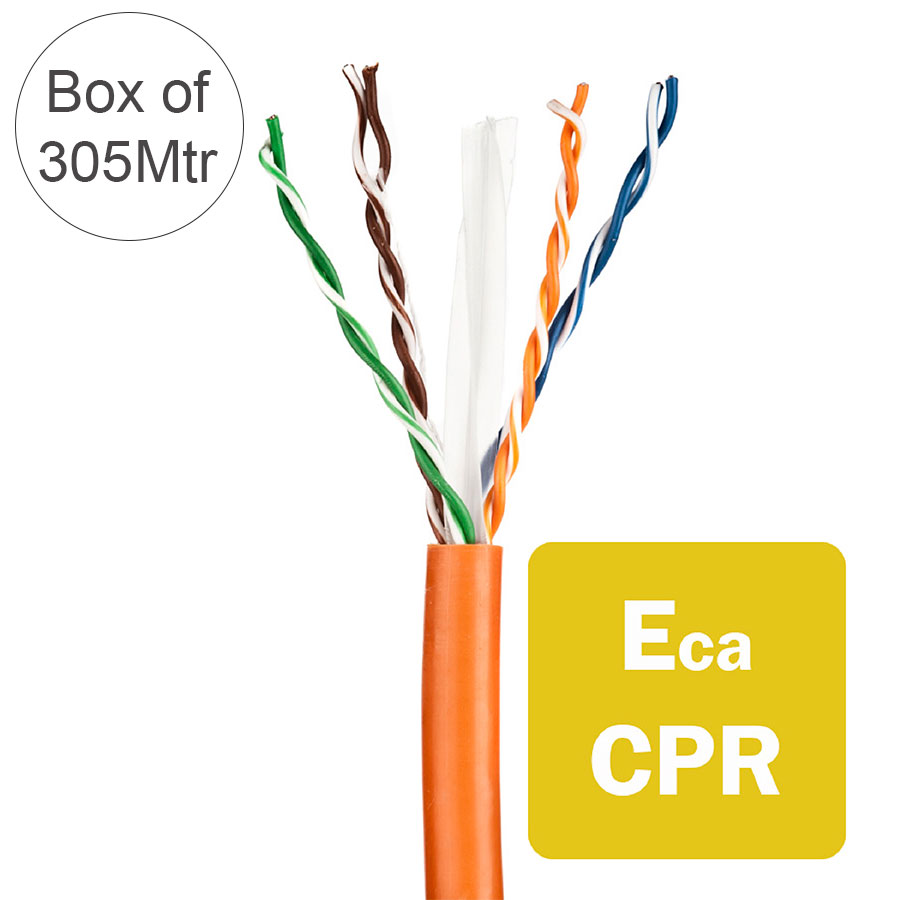
Cat5e, Cat6, Cat6A, Cat7 & Cat7A Data Cables
FAQs
The differences are:
- Cat5e data cables support up to 1Gbps over 100m, suitable for basic office or home networking.
- Cat6 data cables support 1Gbps up to 100m and 10Gbps up to 55m, better performance for small business and higher bandwidth needs.
- Cat6A data cables support 10Gbps up to 100m, shielded options reduce crosstalk in data centers and enterprise networks.
- Cat7 data cable uses shielding on each pair and overall, supports up to 10Gbps with improved noise immunity.
- Cat7A data cable enhanced shielding and bandwidth, supporting 25-40Gbps for short distances in specialised data center environments.
Consider the following:
- Network speed, match the category to your current and future bandwidth requirements (e.g., Cat6A for 10G ready networks).
- Cable length ensures runs don’t exceed the category standard (100m max for most twisted pair cables).
- Your environment, shielded cables (F/UTP, S/FTP) are best in high interference or high density areas.
- Application, office LAN, data center backbone, or industrial setting may require different performance and durability levels.
We offer a wide variety of preterminated patch cables and bulk reels in multiple lengths, from 0.5m patch leads up to 500m reels. Common colours include blue, grey, black, red, yellow, green, and white, allowing for easy identification, colour coded networks, or compliance with site specific standards.
All our cables meet or exceed industry standards (ANSI/TIA, ISO/IEC, EN), ensuring performance regardless of brand. However, differences can include:
- Build quality, like jacket material, shielding type, and bend radius flexibility.
- Certifications, like third party verification for compliance and warranty purposes.
- Price points vary depending on brand, features, and origin.
Choosing the right manufacturer may come down to project requirements, budget, and brand preference.