Data & Server Cabinets
FAQs
Data cabinets are designed for network and patching equipment such as switches, routers, and patch panels. They usually feature shallow depths and strong cable management options.
Server cabinets, on the other hand, are deeper and more robust, built to house servers, UPS units, and heavier hardware. They often include enhanced cooling, airflow management, and load bearing capabilities.
Both provide secure, organised housing for IT equipment and are available in a range of sizes (measured in “U” rack units).
Netceed offers a wide range of cabinet sizes and styles to suit different environments:
- Wall mounted cabinets, compact solutions for smaller network installations.
- Floor standing cabinets for larger, high density equipment setups.
- Standard rack heights, typically range from 6U to 48U.
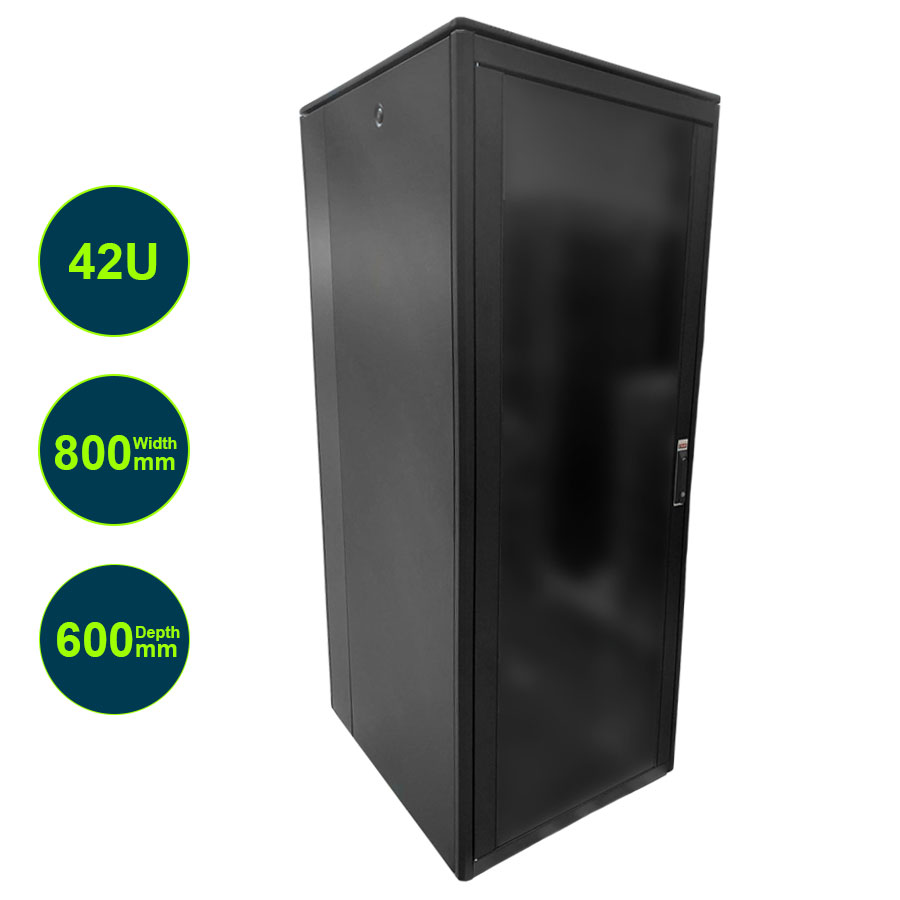
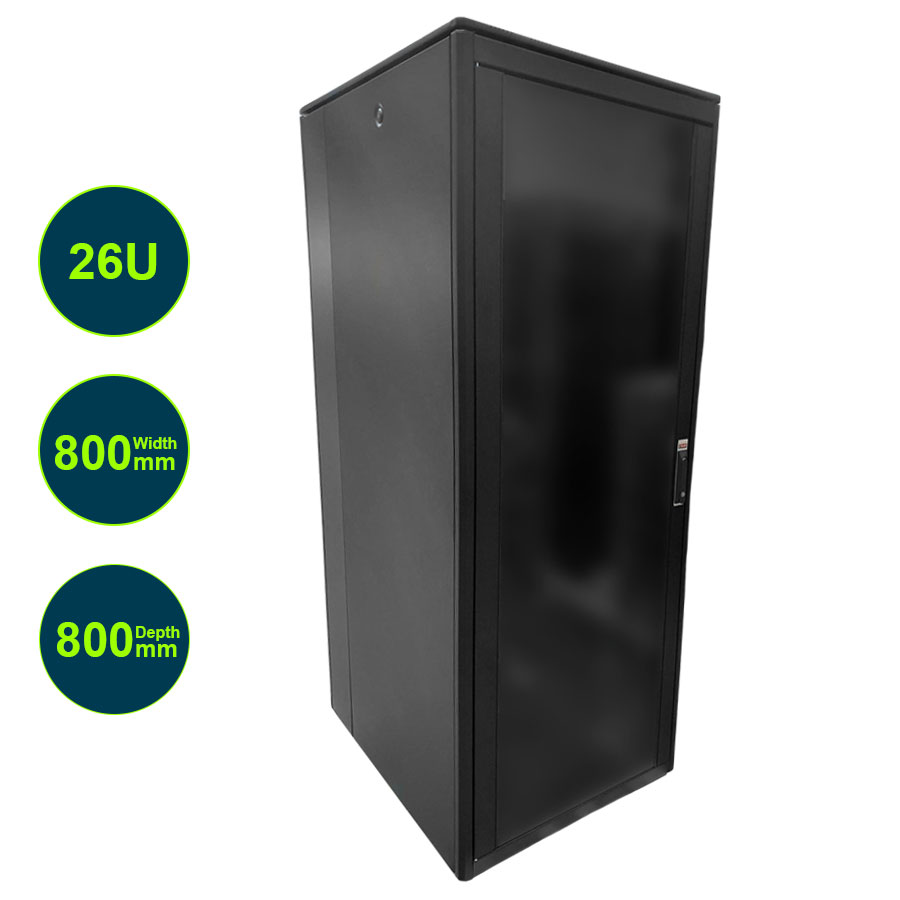
- Widths and depths, standard 600mm and 800mm wide cabinets with variable depths (600mm to 1200mm) depending on your hardware and airflow requirements.
When selecting a cabinet, consider:
- Equipment size and weight to ensure the cabinet’s depth and load capacity fit your hardware.
- Airflow and cooling, cabinets with perforated doors, fan trays, or blanking panels help maintain efficient airflow.
- Cable management, vertical and horizontal organisers improve access and maintenance.
- Security, look for lockable front/rear doors and side panels to prevent unauthorised access.
- Expandability, choose modular designs that support future network growth.
To optimise performance, organisation, and safety, consider:
- Cable management accessories like trays, rings, and panels for neat cabling.
- Cooling solutions like fan trays and blanking panels for temperature control.
- Hardware kits like cage nuts, bolts, and mounting rails.
- Power management like PDUs and UPS units for reliable power delivery.
- Support accessories like plinths, castors, and jacking feet for positioning and mobility.