Fibre Optic Wall Outlets & Modules
FAQs
A fibre optic wall outlet is a compact termination point for fibre optic cabling, usually mounted on a wall inside customer premises. It provides a neat, protected, and accessible interface for connecting fibre optic patch leads to end-user devices or home gateways. In FTTx networks, they are the handover point between the provider’s fibre network and the customer’s equipment.
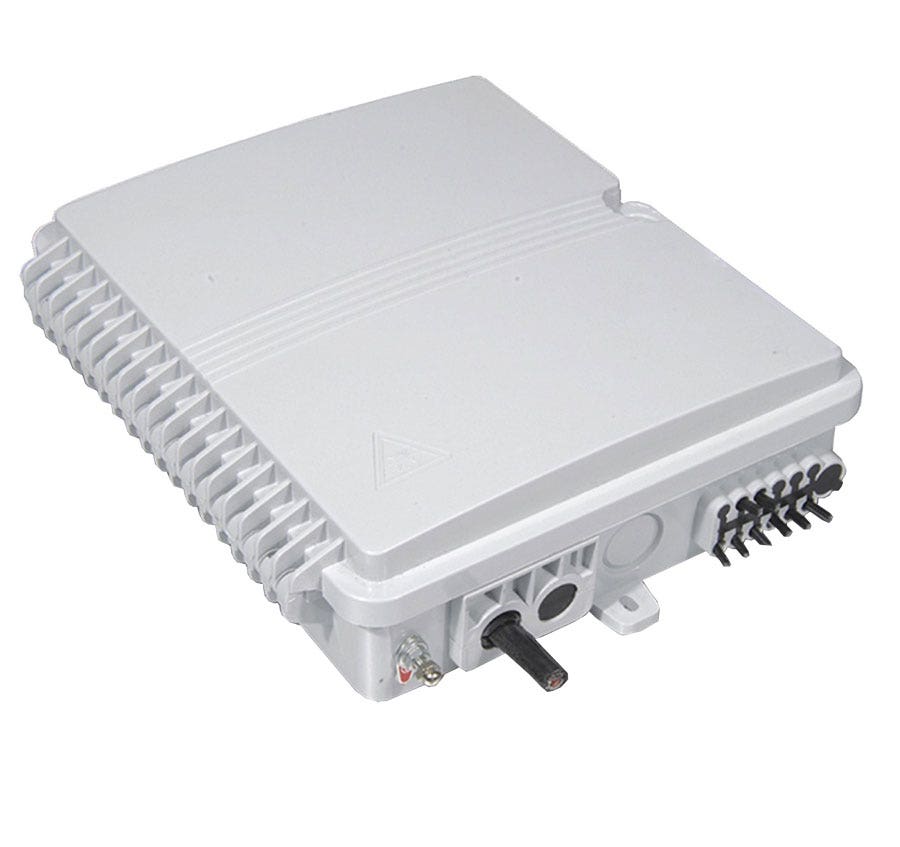
Standard fibre outlets are small enclosures designed for one or two fibres, typically used in offices, data centers or residential connections. FTTx wall outlets are larger enclosures with space for splicing, slack storage and multiple connectors, built to handle fibre-to-the-home (FTTH) or multi dwelling unit (MDU) deployments. They are often lockable and more robust for carrier grade applications.
Features include:
- Port capacity, the number of fibres or connectors supported.
- Connector type, compatibility with SC, LC, or other connector styles.
- Slack management, space for fibre storage and bend radius protection.
- Mounting options, like wall, surface, or recessed mounting.
- Protection, like lockable or tamper resistant designs for added security in shared spaces.
They are typically installed in:
- Residential and FTTH deployments to connect the incoming fibre to the customer’s router or ONU.
- Office environments as desk or wall outlets for structured cabling systems.
- Multi dwelling units (MDUs) in shared areas to distribute fibre to multiple apartments.
- Industrial or public spaces using rugged or lockable wall boxes for secure termination and patching.