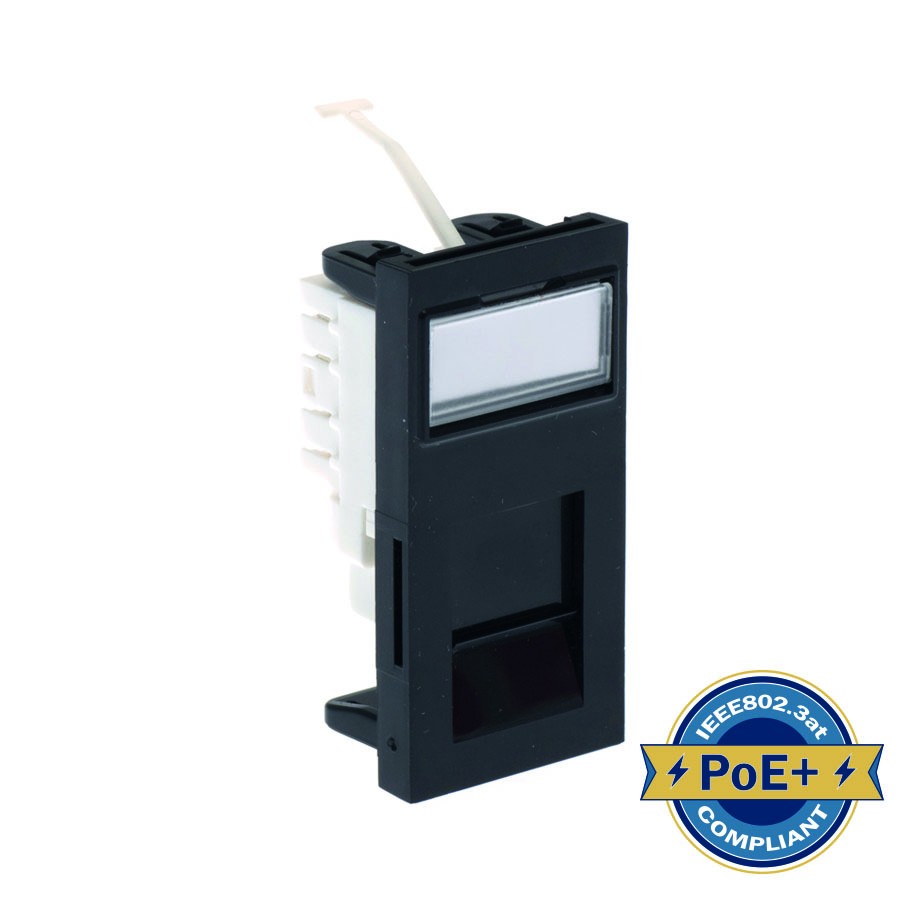
Cat5e Modules
FAQs
Cat5e modules are RJ45 connectivity components used to terminate Ethernet cables within faceplates, floor boxes, and trunking systems. They create a fixed network outlet that allows devices to connect via patch leads, forming a key part of structured cabling infrastructure in commercial and residential environments.
Cat5e modules are available in a variety of formats, including Euro modules (25 x 50 mm), LJ6C modules, and keystone style inserts. They also come in different configurations such as unshielded (UTP), shielded (FTP), and tool-less options, allowing installers to choose the most suitable solution for their specific network requirements
Cat5e modules are designed for use in multiple installation environments, including wall mounted faceplates, floor boxes, and patch panels. Their snap-in design allows them to be easily fitted into single or double gang faceplates, making them a flexible solution for both new installations and network upgrades.
Many Cat5e modules feature built in spring loaded shutters that protect the RJ45 port from dust and contamination when not in use. This helps maintain long term network performance, reduces maintenance requirements, and ensures a cleaner, more reliable connection in busy or high traffic environments.