Patch Panels
FAQs
A patch panel is a central termination point that connects horizontal cabling runs to active equipment (like switches or routers) using short patch leads. It provides:
- Organisation, keeping cable runs neat and accessible.
- Flexibility, easy to reconfigure connections without disturbing permanent cabling.
- Reliability, reduces wear on switch ports by limiting reconnections to patch leads.
Match the patch panel to the category of your installed cabling:
- Cat5e patch panels are suitable for up to 1Gbps Ethernet.
- Cat6 patch panels support 1Gbps (100m) and 10Gbps (up to 55m).
- Cat6A patch panels support 10Gbps over the full 100m, widely used in modern enterprise networks.
-Cat8 patch panels are designed for 25-40Gbps short distance connections in data centers.
Using a higher rated patch panel than your cabling allows for future upgrades without immediate recabling.
An unloaded patch panel is an empty chassis that accepts keystone jacks or modules. Benefits include:
- Flexibility to mix copper and fibre modules in the same panel.
- Customisation, only install the ports you need now and add more later.
- Easy replacement, swap out a single jack if damaged, instead of the whole panel.
They are ideal for projects where cabling types or categories may change over time.
Accessories include:
- Rear cable management bars to support horizontal cabling and reduce strain on terminations.
- Label holders and port IDs to make troubleshooting and documentation easier.
- Cable managers (horizontal/vertical) to keep patch leads tidy and maintain airflow.
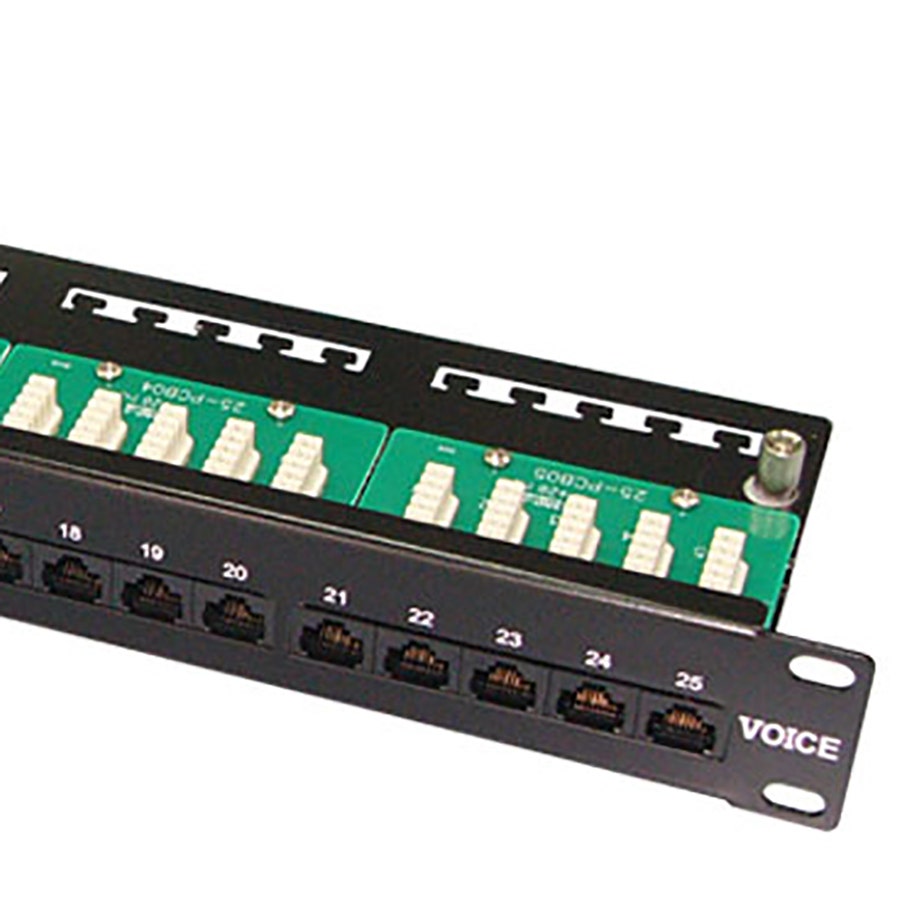
- Voice patch panels are pre-configured for telephony applications, making them easier to deploy in PBX systems.