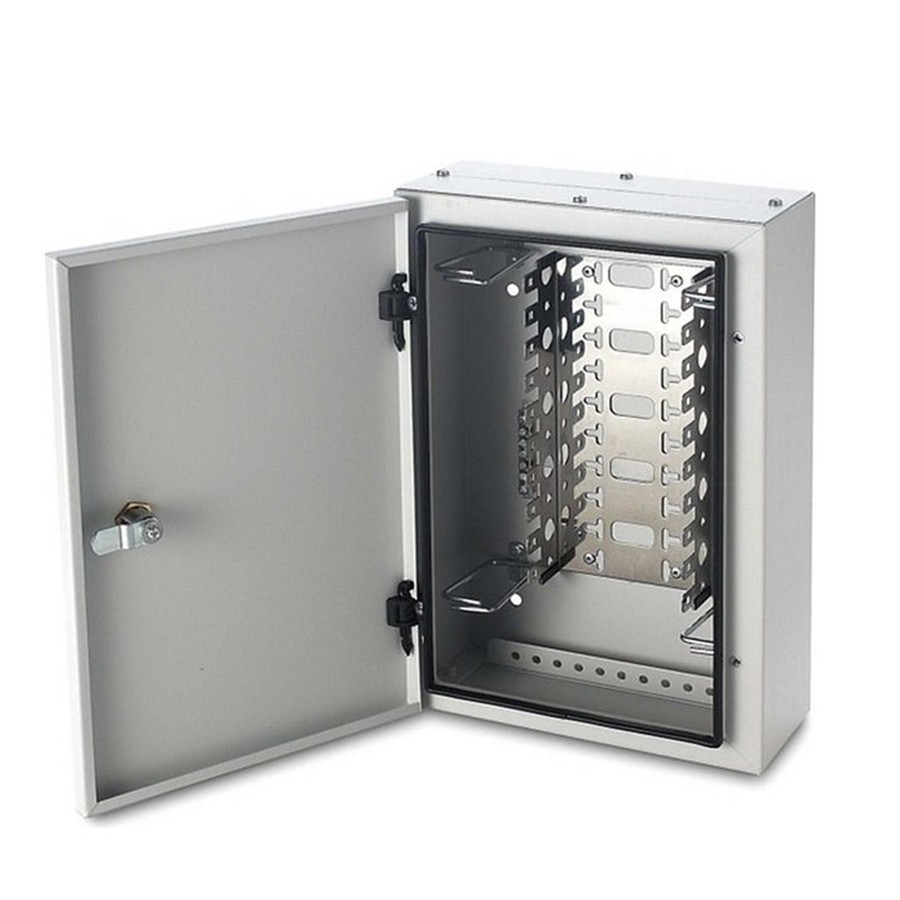
Box Connections
FAQs
Box connections are termination and connection points used in voice cabling systems to join, protect, and manage telephone or data lines. They provide a secure housing for wire terminations, helping to maintain clear signal transmission and prevent cable damage. Box connections are commonly used at junction points, building entry points, and wall terminations in both commercial and residential telecom installations.
Internal box connections are designed for indoor use, typically within offices, comms rooms, or internal wiring systems. These provide a neat, accessible housing for voice or data terminations and are usually made from lightweight plastic.
External box connections are built with weatherproof and UV resistant enclosures to protect wiring outdoors. They safeguard connections against moisture, dust, and temperature changes, making them ideal for external walls, poles, and entry points.
Consider:
- Installation environment, indoor installations require standard internal boxes, while outdoor or exposed locations need IP rated external boxes.
- Connection type, choose between IDC (Insulation Displacement Connection) or screw terminal options based on your cabling.
- Pair capacity, match the box to your system’s needs (e.g. 2 pair, 10 pair, or 20 pair).
- Mounting method, check if the box can be surface mounted, wall mounted, or pole mounted depending on your setup.
Benefits include:
- Protection, they keep cable joints safe from environmental and physical damage.
- Organisation, they provide a tidy and accessible point for managing line connections.
- Ease of maintenance, simplifies fault detection, testing, and repairs.
- Longevity, extends the lifespan of telecom wiring by protecting joints and reducing exposure to stress or moisture.