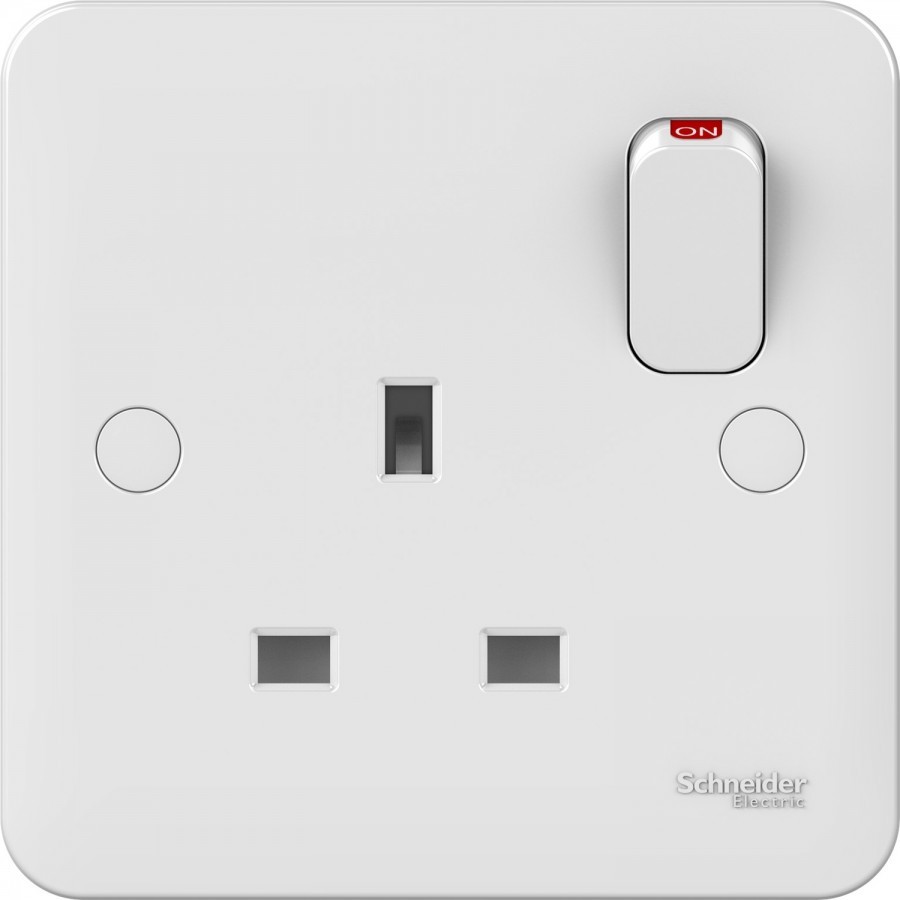
Power Sockets & Spurs
FAQs
A fused spur is a fixed wiring device that connects directly into a circuit (typically via a consumer unit) and provides a fused, dedicated outlet rather than a standard plug socket. Use cases include:
- Connecting fixed appliances such as boilers, water heaters, extractors, or HVAC equipment.
- Situations where plug-and-socket arrangements aren’t practical or allowed under wiring regulations.
- Ensuring correct overcurrent protection (through a fuse or MCB) for a single appliance.
- Locations where a permanent, safe, and discreet connection is required (e.g. under a sink, behind a boiler, inside a cupboard).
A fused spur gives a safer, more reliable installation for fixed or semi-fixed appliances compared to a standard socket and plug.
Common types of power sockets include:
- Single sockets for individual devices.
- Twin sockets for powering two appliances from one wall outlet.
- Switched sockets – with an integrated on/off switch for safety and convenience.
- Uswitched sockets for always-on applications or fused spur feeds.
- Switched fused spurs (combined units) combining a switched socket and a fused spur in one module.
To choose the right socket:
- Consider how many devices you’ll connect.
- Decide whether you need a switch (for safety or convenience).
- For fixed or heavy duty loads (washers, heaters), consider a fused spur or fused connection rather than a regular plug socket.
Where multiple sockets are needed in one location, a twin socket or a socket outlet with integrated switch/fuse offers flexibility.
Power sockets and spurs are commonly used in a variety of settings, including:
- Residential homes for appliances, lighting, kitchen devices, and fixed equipment (boilers, heaters).
- Offices and workspaces for desks, computers, UPS units, printers, and modular power distribution.
- Commercial and industrial sites for workbenches, machinery, site tools, and lighting setups.
- Telecom and server rooms use fused spurs and switched sockets for equipment racks, PDUs, UPS units, and network gear.
- Workshops and garages for power tools, compressors, lighting, and fixed installations.
Whether for light duty or heavy loads, sockets and spurs give flexible, code compliant power distribution suitable for almost any environment.
To ensure safe and compliant installations:
- Always use correctly rated cables and fuse sizes, match the fuse or MCB to the appliance current.
- Ensure earth/grounding is correctly connected and maintained, especially for metal cased appliances.
- Use switched fused spurs or fused connections when wiring fixed appliances or where no plug connection is allowed.
- Avoid overloading sockets, spread high draw appliances across separate spurs if possible.
- Use IP-rated sockets in damp or outdoor areas.
- Test sockets after installation for correct polarity, earth continuity, and insulation.
- Label circuits clearly and keep documentation for inspection or maintenance.
Good practice ensures longevity, safety, and compliance with electrical regulations.