Cat6 Modules
FAQs
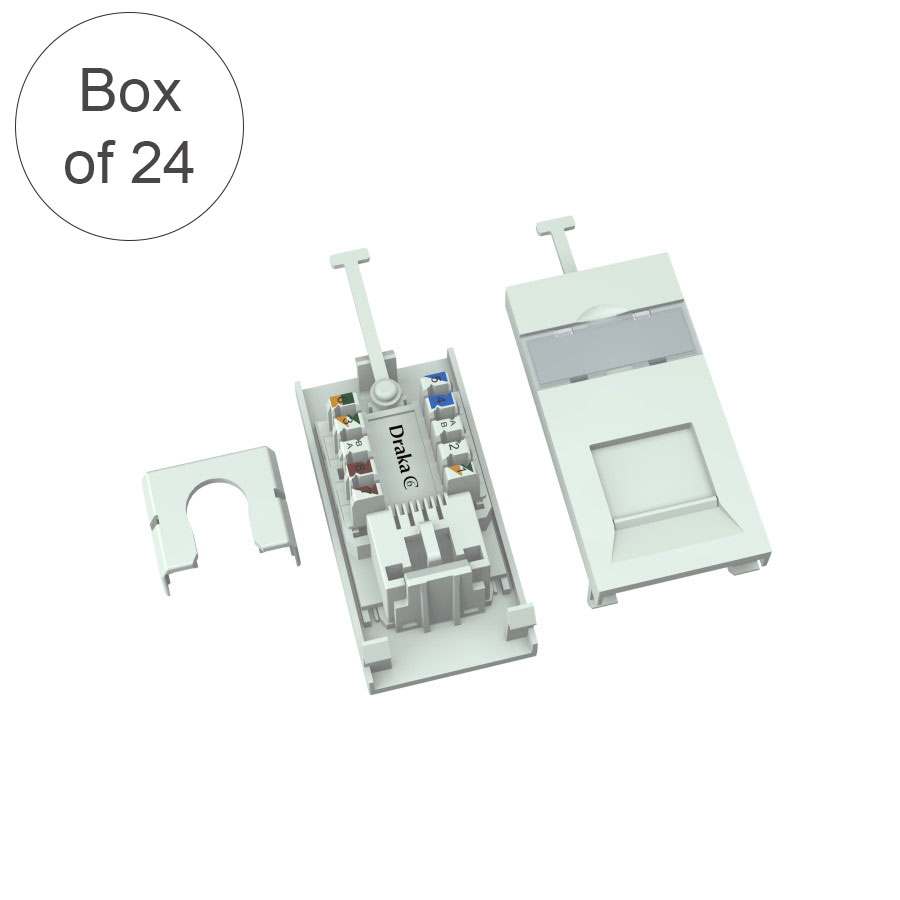
Cat6 modules are RJ45 connectivity components used to terminate Category 6 Ethernet cables in faceplates, floor boxes, and trunking systems. They create a fixed network outlet that connects end user devices to the wider structured cabling infrastructure, supporting high speed data transmission in offices, data centers, and commercial environments.
Cat6 modules are designed for higher bandwidth and reduced crosstalk compared to Cat5e, typically supporting frequencies up to 250 MHz and faster data transmission speeds. This makes them better suited for modern applications such as high density office networks, streaming, and data intensive systems where stable performance is critical.
Cat6 modules are available in a range of formats, including Euro modules, LJ6C modules, and keystone inserts. They also come in shielded (FTP/STP) and unshielded (UTP) versions, as well as toolless and punch-down designs, allowing installers to choose the most suitable option for different environments and installation methods.
Cat6 modules can be installed in wall mounted faceplates, floor boxes, desk pods, and patch panels. Their modular, snap-in design allows flexible configuration of outlets, making it easy to scale or reconfigure structured cabling systems as network requirements evolve.