Fast Ethernet Switches
FAQs
A Fast Ethernet switch is a networking device that connects multiple devices (such as computers, IP phones, and access points) within a Local Area Network (LAN) and transfers data at speeds up to 100 Mbps. It helps manage traffic efficiently, reducing network congestion and improving performance. Fast Ethernet switches are ideal for small to medium sized businesses, branch offices, and residential networks where ultra high speed Gigabit connections may not be required.
Desktop Fast Ethernet switches are compact, fanless models ideal for small offices or workstations. They are plug-and-play devices that can be placed on desks or mounted on walls, providing silent operation and low power consumption.
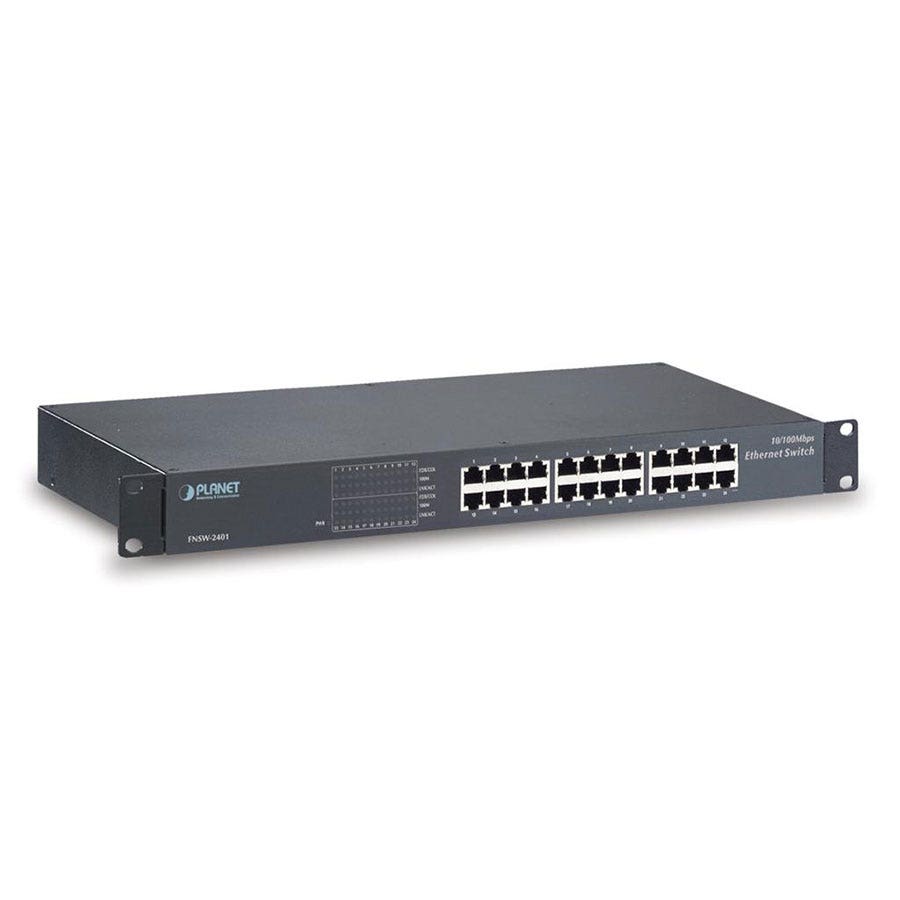
Rack mounted Fast Ethernet switches are designed for larger or centralised installations, they fit standard 19" racks and support higher port counts (8, 16, 24, or 48 ports). Rack mounted switches often feature enhanced management options, better ventilation, and expandability for enterprise networks.
Choosing between the two depends on network size, space availability, and scalability needs.
When selecting the right switch, consider:
- Port count, match the number of connected devices, small offices may need 5-8 ports, while network cabinets may need 24 or more.
- Management type, enmanaged switches are plug-and-play whereas managed switches allow advanced control, VLAN setup, and monitoring.
- PoE capability, if you need to power devices such as IP phones or cameras, consider PoE enabled switches.
- Mounting and environment, choose desktop switches for compact setups or rack mounted models for structured cabling environments.
- Uplink options, some switches include SFP ports for fibre uplinks, allowing greater flexibility for mixed network infrastructure.
Benefits include:
- Cost effective performance provides reliable networking at an affordable price.
- Energy efficient design, any models feature low power consumption and fanless operation.
- Simple installation, most are plug-and-play with no configuration needed for basic use.
- Scalable network management, managed models enable traffic control, segmentation, and monitoring.
- Versatility, available in various formats for both desktop and rack applications, suitable for offices, education, and small industrial networks.