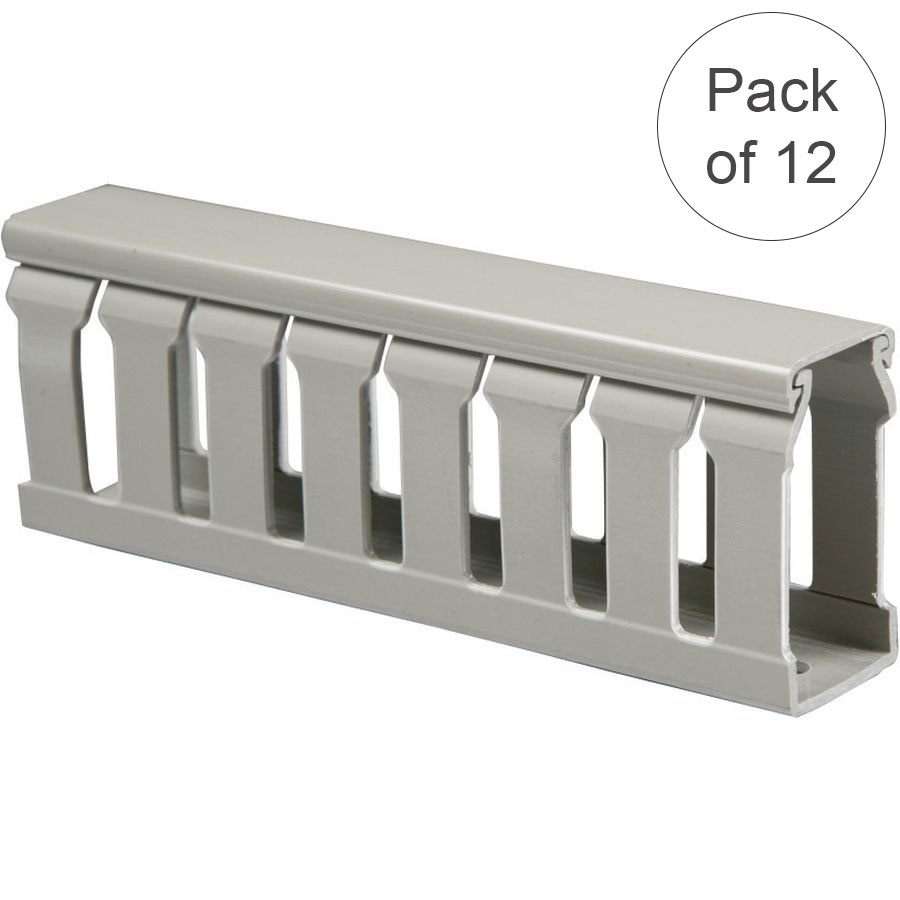
Slotted Trunking
FAQs
Slotted trunking (also called finger trunking or wiring duct) is a cable management solution with precut slots along its sides that allow cables to exit at multiple points. It’s widely used in control panels, switchgear, data cabinets, and enclosures to route, organise, and protect wires while keeping them accessible for maintenance and upgrades.
Open slotted trunking is rigid PVC ducting with open slots, designed for neat, professional wiring layouts inside panels or cabinets.
Flexible finger trunking is made from flexible material, allowing it to bend around corners and irregular shapes while still providing cable protection. This is ideal where rigid trunking cannot be easily installed.
Benefits include:
- Improved organisation as it keeps wiring tidy, grouped, and easy to trace.
- Accessibility, cables can be easily added, removed, or rerouted through side slots.
- Protection, it shields cables from abrasion and accidental damage.
- Professional finish, it creates a clean, standards compliant layout inside enclosures.
Consider the following:
- Size and cable capacity, ensure trunking is wide and deep enough for current and future cabling needs.
- Slot style, like wide slots for larger cables, narrow slots for smaller control wires.
- Flexibility, choose rigid open slotted trunking for straight runs and flexible finger trunking for curved or irregular paths.
- Material and compliance, check flame retardant ratings, halogen free options, and industry standards for safety.