Copper Data Cabling Test Equipment
FAQs
There are several categories of copper cabling test equipment, each designed for different levels of testing:
- Data Cabling Certifiers: These provide full, standards based certification for Cat5e, Cat6, Cat6A, Cat7/7A, and Cat8 installations. They produce pass/fail results and detailed reports required for warranty approval and commercial projects.
- Verification Testers: Used to check continuity, wiremap, length, and cable quality. Ideal for installing and validating new cabling without requiring full certification.
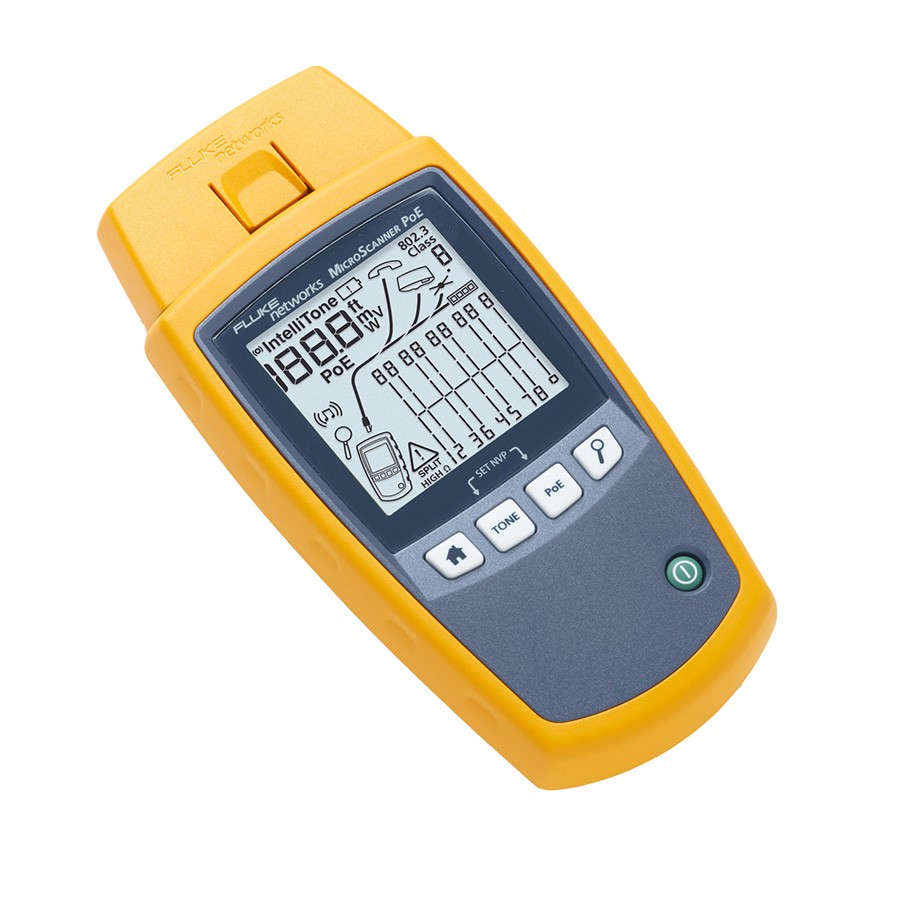
- PoE Testers: Confirm the presence, class, and load capability of Power over Ethernet on a cable run. Useful for checking compatibility for IP cameras, Wi-Fi access points, VoIP phones, and IoT devices.
- Wire Mapping & Fault Finding Tools: Identify miswires, split pairs, open circuits, shorts, and general cabling issues.
Together, these testers support every stage of copper network installation, from initial installation to troubleshooting.
Key features depend on the depth of testing you need:
- For certifiers:
Support for Cat6A–Cat8 standards
Automatic pass/fail results
Memory and reporting software
Permanent link and channel adapters
Fast test cycle times for large projects
Compliance with TIA/ISO industry standards
- For verification testers:
Wiremap and continuity testing
Length measurement (TDR)
Tone generation for cable tracing
Shield detection
Distance-to-fault measurement
- For PoE testers:
PoE class identification
Voltage and power load testing
Support for 802.3af / 802.3at / 802.3bt
Real world load simulation
Choosing the right tool helps ensure accuracy, reduce installation time, and avoid costly network issues later.
Consider the following factors:
- Type of work you perform:
Large commercial jobs may require a full certifier.
Small business or residential installations may only need a verification tester.
- Customer requirements:
Some clients require certification reports for warranty and compliance, which only certifiers can produce.
- Network performance level:
If you are installing Cat6A or faster cabling, a certifier ensures the cable performs to its intended speed.
- Troubleshooting needs:
For day-to-day diagnostics, a wiremap or fault finder is often sufficient.
- PoE environment:
If you frequently install access points, CCTV, or VoIP, a PoE tester is highly recommended.
Choosing based on your typical projects ensures you get a cost effective and suitable tool.
To obtain reliable and repeatable results:
- Always use clean, undamaged test leads and adapters.
- Check tester calibration status to ensure accuracy.
- Test the cabling before connecting active equipment.
- Label cables clearly and store results in the tester for future reference.
- For certification, perform both permanent link and channel tests if required.
- Verify PoE levels before installing powered devices to avoid overload or insufficient supply.
- Document and save all results, especially important for warranty or sign off.
Good testing practice protects network performance and reduces troubleshooting time.