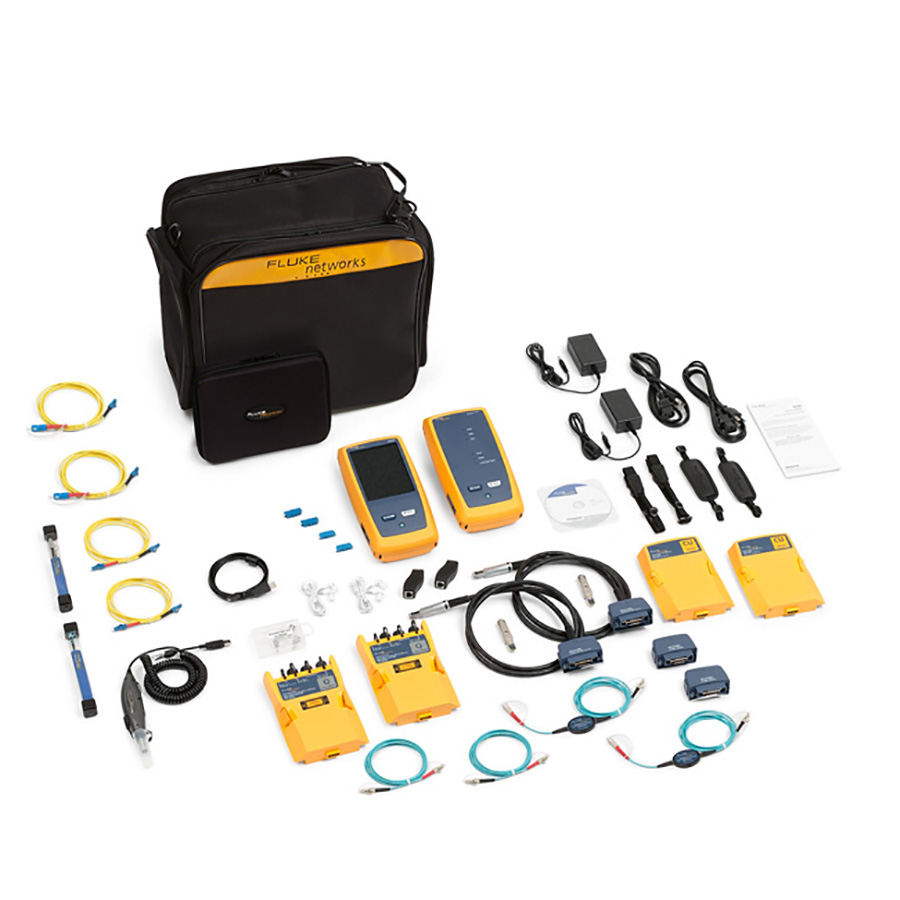
Copper & Fibre Test Kits
FAQs
Copper and fibre test kits are designed to verify, certify, and troubleshoot both types of network infrastructure.
- Copper test kits check cable continuity, wiremap, length, performance, and category compliance (Cat5e through Cat8).
- Fibre test kits measure optical power, insertion loss, polarity, and signal quality using tools such as OLTS (Optical Loss Test Sets).
Installers often need both because many networks today combine copper structured cabling with fibre backbone or FTTx distribution routes. A combined kit ensures you can test every part of a modern telecom or data cabling system with a single solution.
Key features include:
- Support for relevant standards, such as Cat6A/Cat8 for copper and singlemode/multimode fibre for optical testing.
- Certification capability, automated pass/fail results for compliance with industry standards.
- Integrated reporting, memory storage and software to generate test reports for clients.
- Dual wavelength or multi wavelength fibre testing is essential for accurate OLTS results.
- User friendly interface like colour screens, guided test workflows, and quick setup.
- Durability and calibration support, rugged housings and available service/calibration options.
Professional kits from leading brands typically combine ease of use, high accuracy, and reliable long term performance.
The best choice depends on:
- Cable type: Are you testing copper only, fibre only, or both?
- Level of testing required: Verification for basic troubleshooting and installation checks, qalification for ensuring network readiness and certification for full standards compliance (required in many commercial installations)
- Project environment: FTTx rollouts may require fibre OLTS kits, large office or enterprise sites may require Cat6A or Cat8 certification
- Reporting needs: If you must produce test documentation, choose a kit with built in memory and export software.
- Budget and long term use: Higher end certification kits provide future proofing and faster testing for large volumes of work.
Choosing correctly ensures efficiency, compliance, and reduced time on site.
To achieve accurate and reliable test results:
- Calibrate or verify the tester regularly according to manufacturer guidance.
- Use clean, undamaged test leads and fibre reference cables.
- Inspect and clean fibre connectors before every test to avoid signal loss.
- Follow proper testing sequences such as using launch and receive cords for fibre OLTS testing.
- Store results immediately to maintain an audit trail for each installation.
- Handle the equipment carefully to protect sensitive optical interfaces and electronics.
- Keep firmware updated to ensure compatibility with current cabling standards.
Consistent best practices help ensure fast, accurate certification and reduce callbacks or rework.