Fibre Optic Transceivers
-
Direct Attach Cable (DAC) & Active Optical Cable (AOC)
-
Direct Attach Copper Cables (DAC) SFP+ - 10Gb/s
-
Direct Attach Copper Cables (DAC) (QSFP+) - 40Gb/s
-
Quad Small Form-factor Pluggable Plus (QSFP+) Transceivers - 40Gb/s
-
Quad Small Form-Factor Pluggable (QSFP28) Transceivers - 100Gb/s
-
SFP Transceivers - 1Gb/s
-
SFP+ Transceivers - 10Gb/s
FAQs
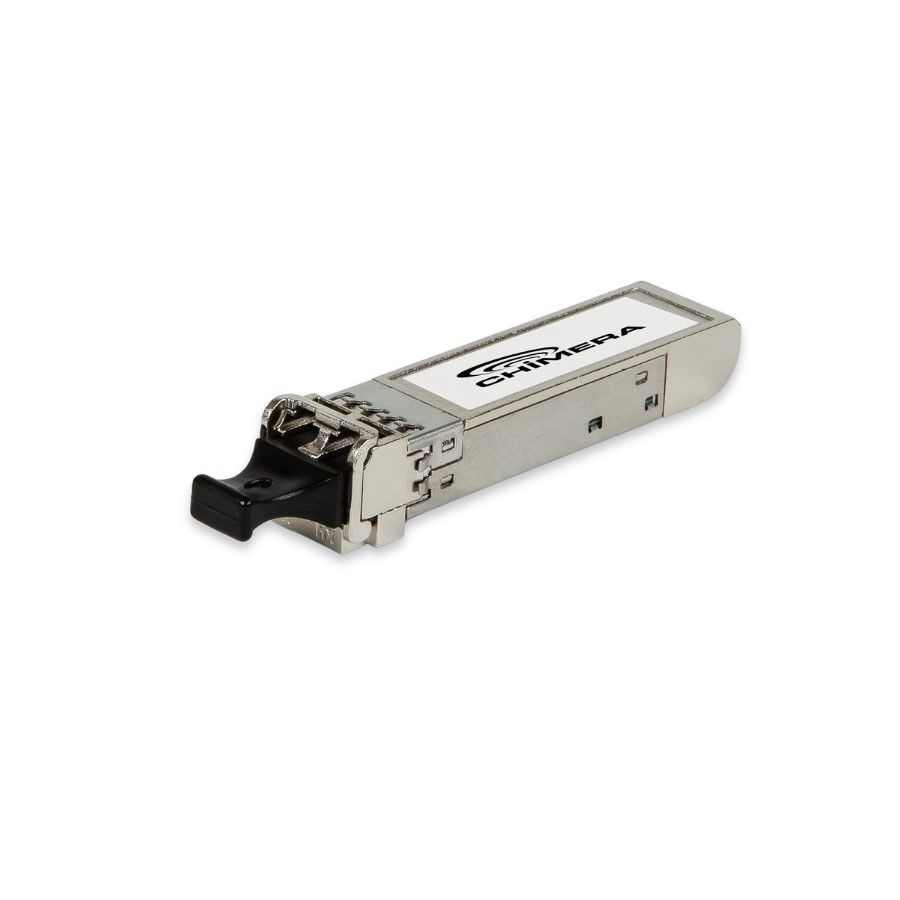
Fibre optic transceivers are modular network components that enable data transmission over fibre optic or copper cabling. They convert electrical signals into optical signals (and vice versa) to allow high speed communication between network devices such as switches, routers, and servers.
Transceivers plug into SFP, SFP+, QSFP+, or QSFP28 ports, depending on the required data rate (1Gb/s - 100Gb/s) and cable type. They are essential in data centers, enterprise networks, and telecom applications, ensuring reliable, high bandwidth connectivity.
DAC (Direct Attach Copper) are twinax copper cables with integrated transceivers at each end. Ideal for short-distance (<10 m), low cost connections between switches or servers.
AOC (Active Optical Cable) are a fibre based alternative to DAC, offering longer reach (up to 100m) while maintaining plug-and-play simplicity. Perfect for data centre interconnects.
SFP / SFP+ are Small Form-Factor Pluggable transceivers supporting 1Gb/s (SFP) or 10Gb/s (SFP+). Common for access and aggregation layers in enterprise networks.
QSFP+ / QSFP28 are Quad Small Form-Factor Pluggable modules supporting 40Gb/s (QSFP+) and 100Gb/s (QSFP28). Used in high performance and core network links where greater bandwidth and port density are required.
Each type balances speed, distance, and cost, depending on your network design.
When selecting a transceiver or cable, consider:
- Data rate, match the transceiver to the required link speed (e.g., 1G, 10G, 40G, or 100G).
- Distance, use DACs for short runs, AOCs for medium distances, and optical transceivers with fibre patch leads for long distance links.
- Compatibility, confirm the transceiver matches your switch or router’s brand and model (look for “vendor coded” or “multi vendor compatible” options).
- Connector type, choose between LC, MPO, or RJ45 interfaces based on the fibre or copper infrastructure.
- Environment, like data centres often prefer AOCs or QSFP28s for scalability, while enterprise LANs typically use SFP/SFP+ transceivers.
Benefits include:
- Reliability, they maintain stable, high speed connectivity with minimal latency.
- Energy efficiency, modern transceivers use low power consumption designs, reducing data centre energy costs.
- Simplified installation, plug-and-play design for quick deployment and minimal configuration.
- Scalability, easily upgrade network bandwidth without replacing existing switch hardware.
- Cost control, DACs and AOCs offer a lower total cost of ownership compared to discrete transceiver and fibre combinations for short to medium distances.