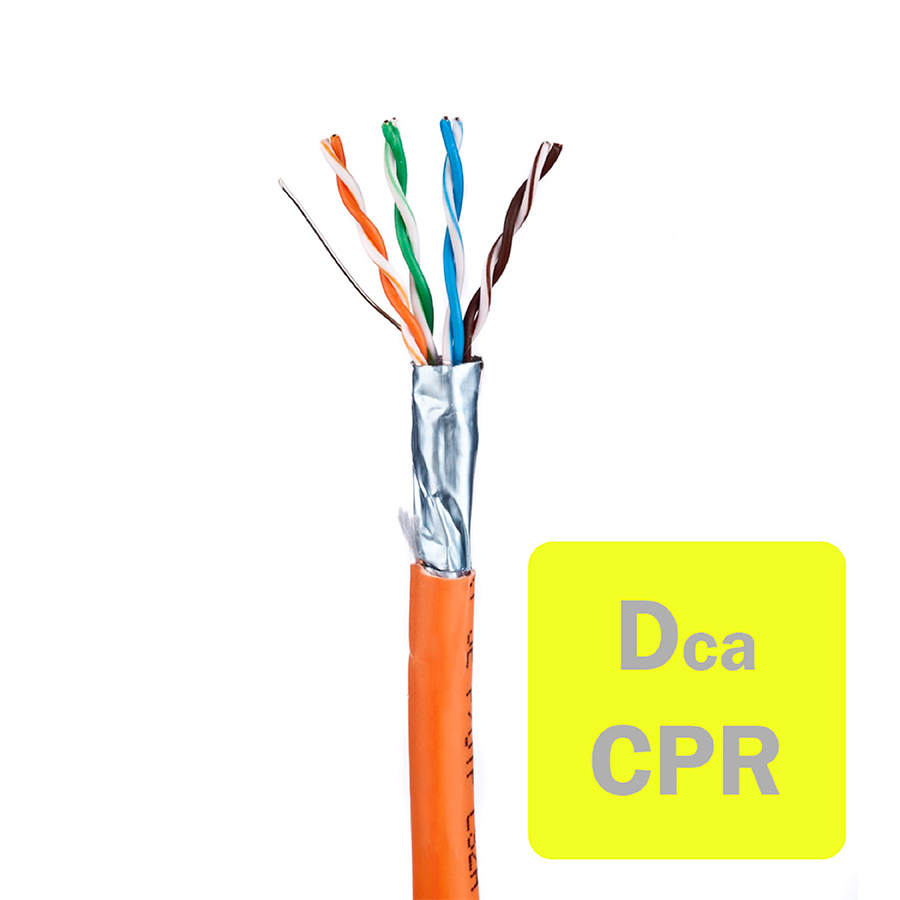
NETCONNECT Cat5e F/UTP Data Cables
FAQs
F/UTP stands for Foiled Unshielded Twisted Pair, meaning the cable has an overall foil shield wrapped around all four twisted pairs. This design helps reduce electromagnetic interference (EMI) compared to standard unshielded cables, making it a reliable choice for environments with higher electrical noise or dense network installations.
Cat5e F/UTP cables are designed to support Gigabit Ethernet (up to 1 Gbps) and frequencies of up to 100 MHz, making them suitable for most modern LAN applications. In some installations, they can also support higher speed applications such as 2.5GBASE-T over shorter distances, depending on network conditions.
These cables are commonly used in structured cabling systems across offices, commercial buildings, and data networks. They are ideal for connecting switches, patch panels, and workstations, and are particularly useful in environments where shielding is needed to maintain signal quality and minimise interference.
Yes, Cat5e F/UTP remains a cost effective and widely used solution for many Ethernet networks. It offers a strong balance of performance, reliability, and affordability, making it suitable for standard business and residential installations that do not require the higher bandwidth of Cat6 or above.